

Best Pet Feeders Under $50 in 2026: 5 Options Compared
The best pet feeder under $50 is the 2-in-1 Gravity Pet Feeder & Water Dispenser — it combines a 2300ml food container with a 1000ml water station, uses no electricity, and keeps your pet fed and hydrated for days without manual refilling. It costs $36.99 and works for cats, small dogs, and puppies.
But the right feeder depends on your pet's eating habits. Free-grazers do well with gravity feeders, while fast eaters need a slow feeder bowl. Cats that splash water everywhere need an anti-splash barrier. And if you travel often, a collapsible option that packs flat saves space. We compared five feeders under $50 — all available with free U.S. shipping — to help you pick the one that actually solves your pet's feeding problem.
Quick Comparison: 5 Best Pet Feeders Under $50
| Feeder | Price | Type | Food Capacity | Best For | Rating |
|---|---|---|---|---|---|
| 2-in-1 Gravity Pet Feeder & Water Dispenser | $36.99 | Gravity (food + water) | 2300ml food + 1000ml water | Free-grazers, multi-day feeding | Best Overall |
| 2-in-1 Cat Face Pet Feeder & Water Dispenser | $34.99 | Gravity (food + water) | 1800ml food + 800ml water | Cat owners, cute home decor | Best for Cats |
| 2-in-1 Pet Slow Feeder Bowl | $34.99 | Slow feeder maze | Standard bowl | Fast eaters, anti-choke | Best for Fast Eaters |
| 5-in-1 Hamburger Pet Bowl Set | $27.99 | Stackable multi-layer | Multiple compartments | Portion control, variety | Best Value |
| 3-in-1 Pet Travel Collapsible Bowl | $22.99 | Collapsible slow feeder + lick mat | Standard bowl | Travel, outdoor use | Best for Travel |
Detailed Reviews
1. 2-in-1 Gravity Pet Feeder & Water Dispenser — Best Overall ($36.99)

This gravity-based feeder handles both food and water in a single unit with a 2300ml dry food container and a 1000ml water reservoir. The gravity-refill mechanism keeps the bowl topped up automatically as your pet eats and drinks — no electricity, no batteries, no programming.
The dry-and-wet separation design prevents kibble from getting soggy, which is a common problem with cheaper 2-in-1 units. The wide, low-profile base makes it stable enough for medium dogs, and the transparent containers let you see food and water levels at a glance.
Pros: Largest capacity in this roundup, no power needed, easy to clean, food stays dry. Cons: No portion control (free-feeding only), not suitable for wet food. Best for: Pet owners who want set-it-and-forget-it feeding for 2–3 days. Great for weekend trips.
2. 2-in-1 Cat Face Pet Feeder & Water Dispenser — Best for Cats ($34.99)

Same gravity-refill concept as the top pick, but in a compact cat-face design with an 1800ml food hopper and 800ml water tank. The anti-splash barrier around the water bowl keeps floors dry — a feature cat owners will appreciate. Available in four colors (Green, White, Orange, Pink) to match your home.
The smaller footprint makes it ideal for apartments and tight spaces. The cat-face aesthetic is a bonus if your feeding station sits in a visible area.
Pros: Anti-splash water barrier, compact size, decorative design, 4 color options. Cons: Smaller capacity than the standard gravity feeder, cat-sized portions only. Best for: Single-cat households, small apartments, owners who care about aesthetics.
3. 2-in-1 Pet Slow Feeder Bowl — Best for Fast Eaters ($34.99)

If your pet inhales food in seconds, a gravity feeder will only make the problem worse. This slow feeder uses an anti-choke maze design that forces pets to work around ridges and channels to get their food, slowing eating by 5–10x.
The non-slip feet keep the bowl in place (important for enthusiastic eaters), and the 2-in-1 design includes a water bowl section beside the maze. The ABS food-grade material is dishwasher-safe.
Pros: Prevents bloating and vomiting from fast eating, non-slip base, dishwasher safe. Cons: Needs manual refilling (not gravity-fed), some pets may get frustrated initially. Best for: Dogs and cats that eat too fast, pets prone to bloating or regurgitation.
4. 5-in-1 Hamburger Pet Bowl Set — Best Value ($27.99)
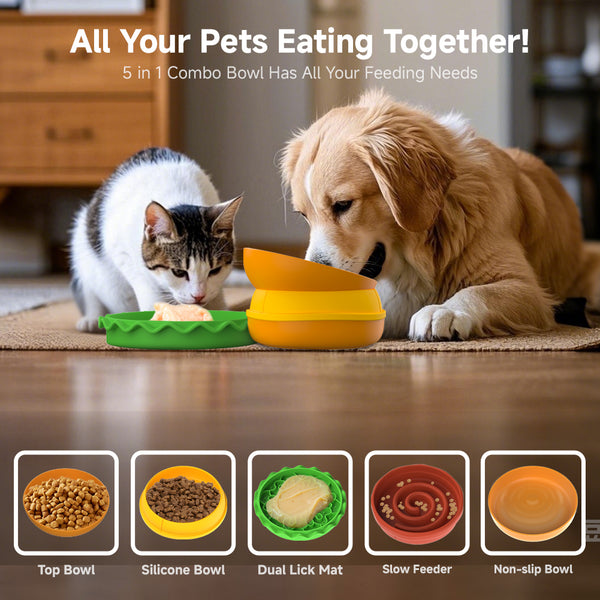
This stackable set includes multiple feeding layers in a fun hamburger design that stores compactly when not in use. Each layer serves a different function — food, water, slow feeder, and storage — making it the most versatile option in this list at the lowest price.
The playful design appeals to kids and makes feeding time more engaging. All layers are removable and washable.
Pros: Lowest price, 5 functions in one, compact storage, fun design. Cons: Smaller portions than dedicated feeders, plastic construction. Best for: Budget-conscious buyers, families with kids, anyone who wants versatility.
5. 3-in-1 Pet Travel Collapsible Bowl — Best for Travel ($22.99)
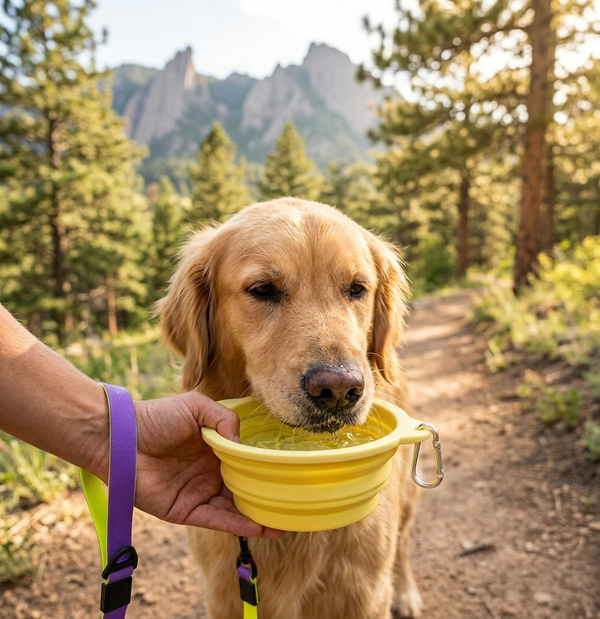
A foldable bowl that combines a slow feeder, a lick mat, and a standard bowl in one collapsible package. Suction cups keep it attached to any flat surface, and it folds flat for packing.
This is not a permanent home feeder — it is the feeder you throw in your bag for hikes, road trips, and vet visits. At $22.99 it is also cheap enough to buy as a backup.
Pros: Folds flat, 3 functions, suction cup mount, cheapest option. Cons: Small capacity, not for daily home use. Best for: Travel, outdoor adventures, vet trips, camping with pets.
Buying Guide: How to Choose the Right Pet Feeder
Gravity Feeders vs. Electric Automatic Feeders
Gravity feeders use the weight of the food to refill the bowl as your pet eats. They have no moving parts, no timers, and no batteries. They cost less, never malfunction, and work during power outages. The trade-off is zero portion control — the bowl is always full, so your pet decides when and how much to eat.
Electric automatic feeders use timers and motors to dispense measured portions at scheduled times. They are better for overweight pets or multi-pet households where one pet steals the other's food. Most start at $60–$100 and require WiFi or batteries.
For most cats and small dogs that self-regulate their eating, a gravity feeder under $50 is all you need. Save the $100+ electric feeder for specific medical or behavioral situations.
What to Look For
Capacity — A 2000ml+ food container lasts 2–3 days for a medium cat. Smaller containers (800–1000ml) need daily refills.
Food + water combo — 2-in-1 feeders save space and solve two problems at once. Make sure the design keeps food and water separated to prevent soggy kibble.
Material — BPA-free plastic or stainless steel. Avoid cheap plastics that can leach chemicals or hold bacteria in scratches.
Cleaning — Look for dishwasher-safe parts or wide openings that you can reach with a sponge. Gravity feeders with narrow necks are hard to clean.
Stability — Non-slip feet or a weighted base prevent your pet from pushing the feeder across the floor. This matters more for dogs than cats.
Frequently Asked Questions
Are gravity pet feeders good for cats?
Yes. Gravity feeders work well for most cats because cats are natural grazers — they prefer to eat small amounts throughout the day rather than large meals at fixed times. A gravity feeder keeps food available 24/7 without overfeeding for most healthy, weight-stable cats. If your cat is overweight or on a restricted diet, a timed portion-control feeder is a better choice.
How long does a gravity feeder last before refilling?
A 2300ml gravity feeder holds roughly 2–3 days of food for one average-sized cat (eating about 200–300 calories per day in dry kibble). For two cats, expect to refill every 1–2 days. The 1800ml model lasts about 2 days for a single cat.
Can I use wet food in a gravity feeder?
No. Gravity feeders are designed for dry kibble only. Wet food does not flow through the gravity mechanism and will spoil if left out for more than 2 hours at room temperature. For wet food, use a standard bowl and serve fresh portions.
Gravity feeder or electric automatic feeder — which is better?
Gravity feeders are better for self-regulating pets, budget-conscious buyers, and anyone who wants zero maintenance. Electric feeders are better for overweight pets that need strict portion control, multi-pet households with food-stealing issues, or owners who want to schedule exact meal times via an app. Most healthy cats and small dogs do fine with gravity.
Do slow feeder bowls actually work?
Yes. Studies and veterinary recommendations confirm that maze-style slow feeders reduce eating speed by 5–10 times. This helps prevent bloating, vomiting, and choking in fast eaters. Most pets adapt to the maze within 1–2 days.
What is the best pet feeder for travel?
A collapsible 3-in-1 bowl that folds flat and attaches with suction cups is the most practical option. It takes up minimal space in a bag, works on any flat surface, and combines a slow feeder, lick mat, and standard bowl in one piece.
Are cheap pet feeders safe?
Look for BPA-free, food-grade materials (ABS plastic or stainless steel). Avoid no-name products without material certifications. All feeders in this guide use food-safe materials and are tested for pet use.
How often should I clean a gravity pet feeder?
Clean the food container and water reservoir at least once a week. Wipe the bowl area daily. Disassemble completely every 2 weeks for a deep clean with warm soapy water or run dishwasher-safe parts through a cycle.