
Dog Harness Sizing Guide: How to Measure Your Dog & Avoid the Most Common Fitting Mistakes
Getting your dog's harness size right isn't just about comfort — it's about safety. A harness that's too loose can slip off in a critical moment. One that's too tight causes chafing, restricted breathing, and long-term discomfort. Here's everything you need to know before you buy.
Why the Wrong Size Is Dangerous
Most harness returns come down to one thing: guessing the size based on breed alone. But dogs vary wildly — a 30-lb Bulldog and a 30-lb Whippet need completely different fits. A harness that's too loose gives your dog an escape route (and some dogs are escape artists). Too tight, and you'll see redness, fur loss, and a dog that dreads walk time.
How to Measure Your Dog in 2 Steps
You only need a soft tape measure and 2 measurements:
1. Neck girth — Measure around the base of the neck, where the collar sits. Keep two fingers between the tape and your dog's skin.
2. Chest girth — This is the most important measurement. Wrap the tape around the widest part of the chest, just behind the front legs. Again, two-finger gap.
📏 Pro tip: Always measure twice, and if your dog is between sizes, size up.
Size Chart: S to XL
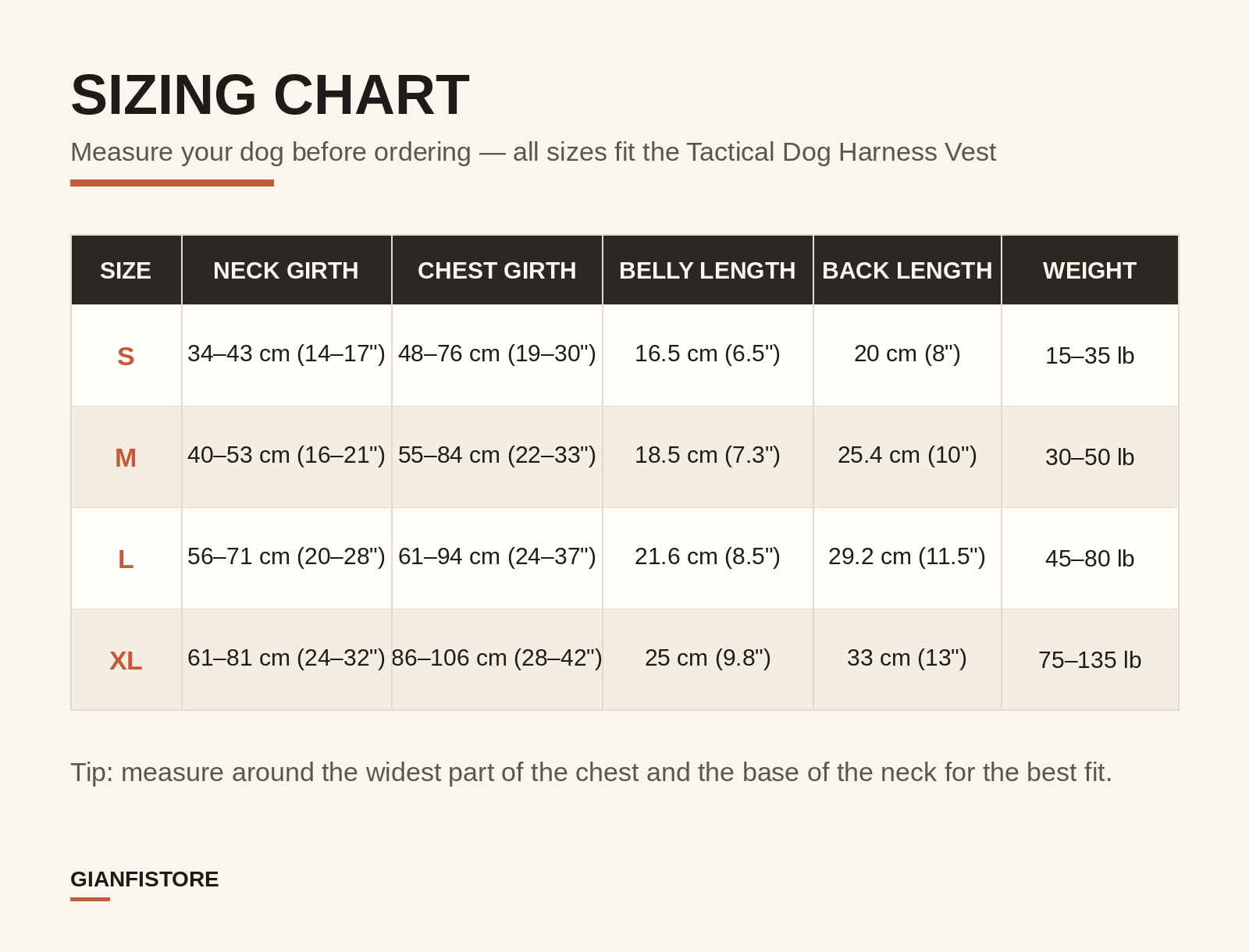
These are the exact measurements for the GianfiStore Tactical Dog Harness Vest — use them alongside the two measurements above to pick your size.
| Size | Neck Girth | Chest Girth | Weight | Best For |
|---|---|---|---|---|
| S | 34–43 cm (14–17") | 48–76 cm (19–30") | 15–35 lb | Beagle, Cocker Spaniel, small breeds |
| M | 40–53 cm (16–21") | 55–84 cm (22–33") | 30–50 lb | Border Collie, Labrador, medium breeds |
| L | 56–71 cm (20–28") | 61–94 cm (24–37") | 45–80 lb | German Shepherd, Husky, large breeds |
| XL | 61–81 cm (24–32") | 86–106 cm (28–42") | 75–135 lb | Rottweiler, Malinois, extra-large breeds |
3 Signs the Harness Doesn't Fit
Too tight:
- You can't slide two fingers under the straps
- Your dog scratches at the harness constantly
- Red marks or fur loss after walks
Too loose:
- The harness shifts sideways during walks
- Your dog can back out of it when startled
- The D-ring sits off-center on the back
No-Pull vs. Standard Harness: What's the Difference?
A standard harness has a single D-ring on the back — fine for calm dogs on casual walks.
A no-pull harness adds a front chest D-ring. When your dog pulls forward, the leash redirects them sideways instead of letting them power through. It's not a punishment — it's physics. No shock, no pain, just redirection. Combined with consistent training, it's the most effective tool for dogs that pull.
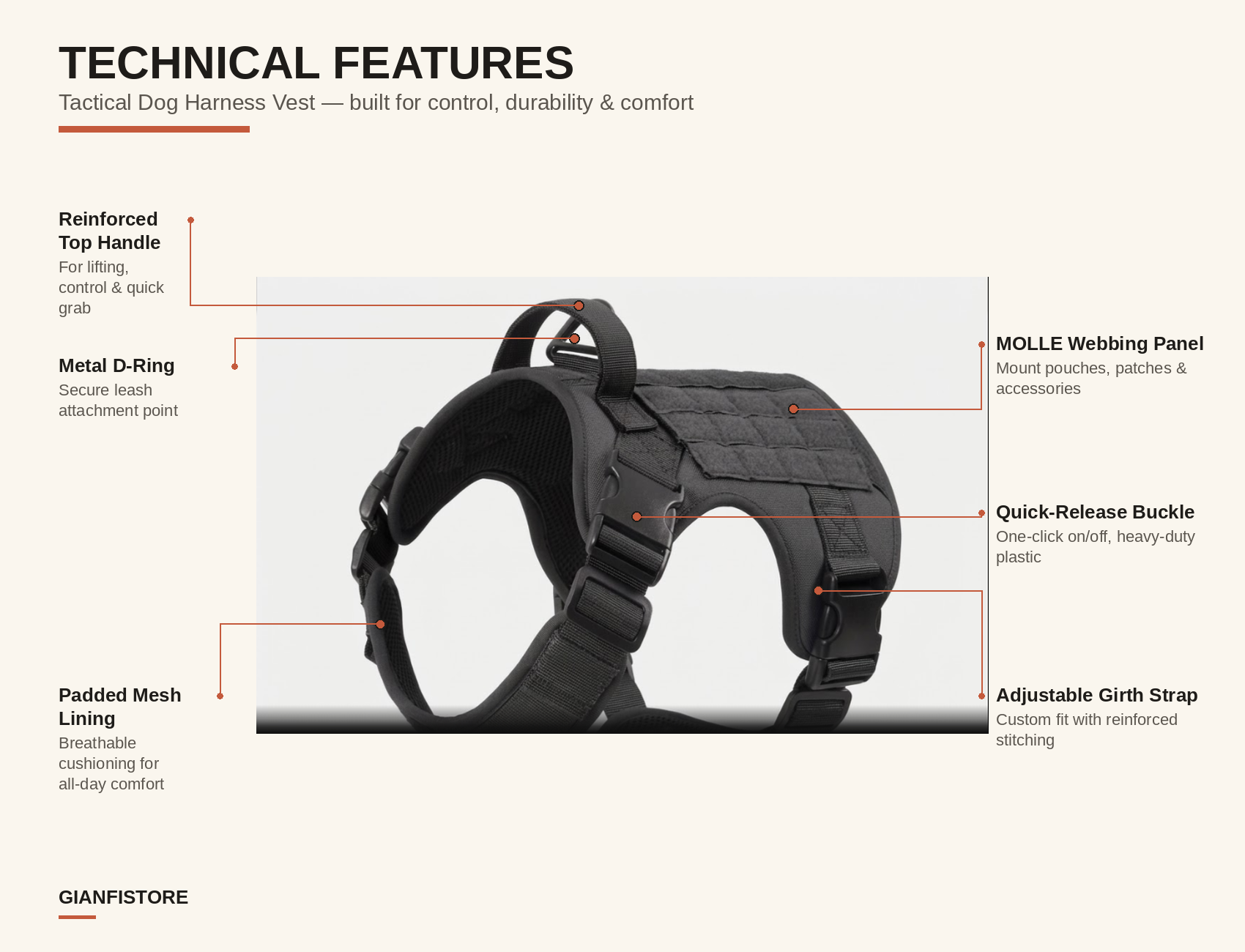
Our Tactical Dog Harness Vest features both attachment points — chest (no-pull) and back (standard) — so you can switch based on the situation.
Ready to Find the Perfect Fit?
The GianfiStore Tactical Dog Harness Vest is built for dogs that mean business — adjustable fit, 360° reflective strips, heavy-duty metal buckles, and dual D-ring attachment. Available in Black, Pink, Tan, and Gray Camo, sizes S to XL.